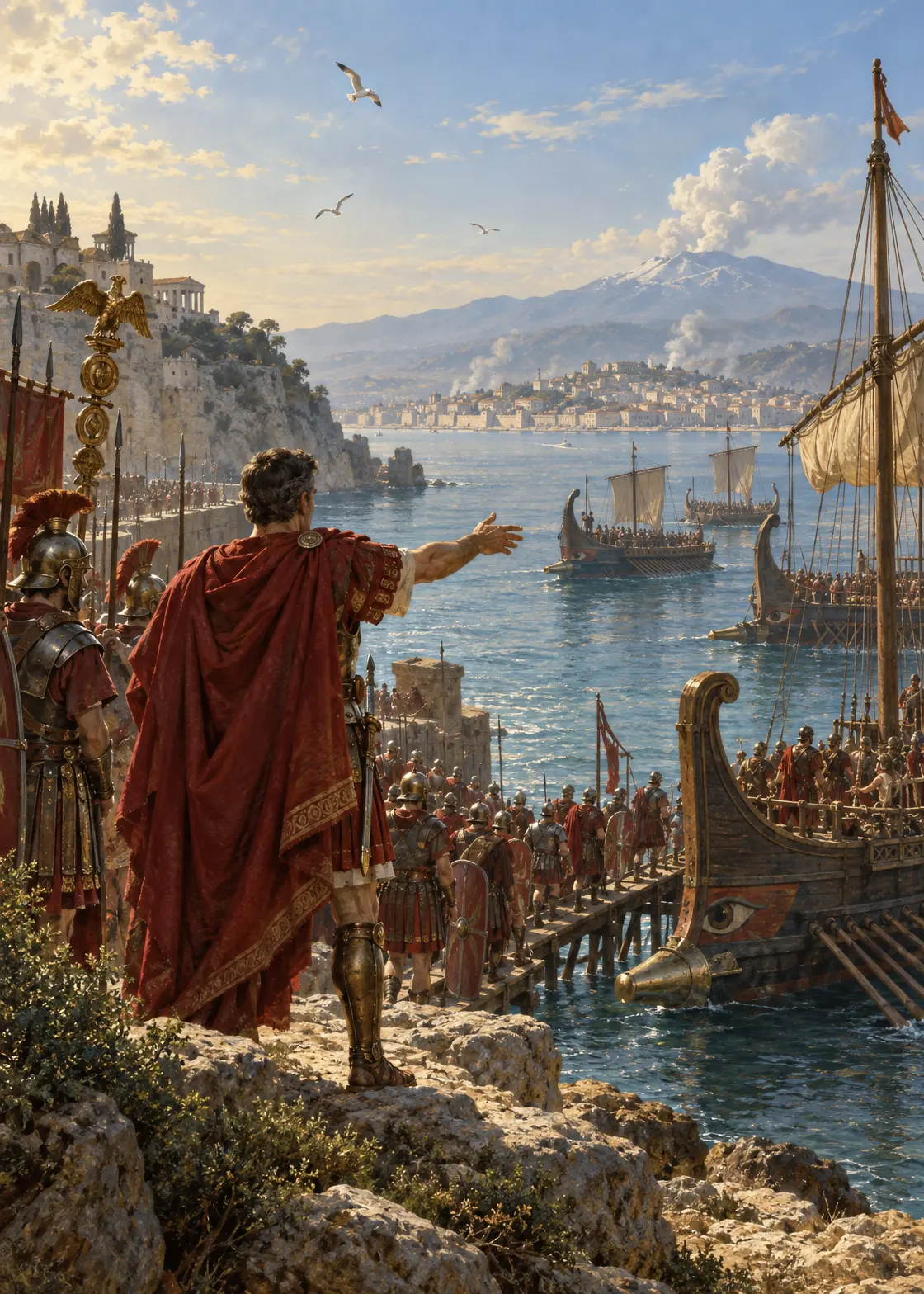
Book II · 264–216 BC
The Mediterranean Wars
Of all the transformations a state may undergo in the course of its history, none is more decisive than that by which a regional power becomes a contender for the wider world.
300 BC200 BC100 BCAD 1AD 100AD 200AD 300AD 400
Contents
The chapters
- ProemProem
- Chapter 1The First Punic War: Opening and the Birth of Roman Sea-PowerCrossroads: The Decision to Build a Fleet
- Chapter 2The First Punic War: Africa, Sicily, and the Long ResolutionCrossroads: The Division at Aspis
- Chapter 3The Interwar Years: Mercenary War, Sardinia, Gauls, and IllyriansCrossroads: The Seizure of Sardinia
- Chapter 4The Coming of Hannibal: From Saguntum to the AlpsCrossroads: The Strategy of Descent: Hannibal at Carthago Nova
- Chapter 5The Year of Hannibal: Ticinus, Trebia, Trasimene, and the Fabian StrategyCrossroads: The Frost at the Trebia
- Chapter 6CannaeCrossroads: The Gates of Rome: Hannibal's Choice at Cannae
- EpilogueRome in the Late Summer of 216
Atlas
The maps of Book II
Select a map to see it whole.
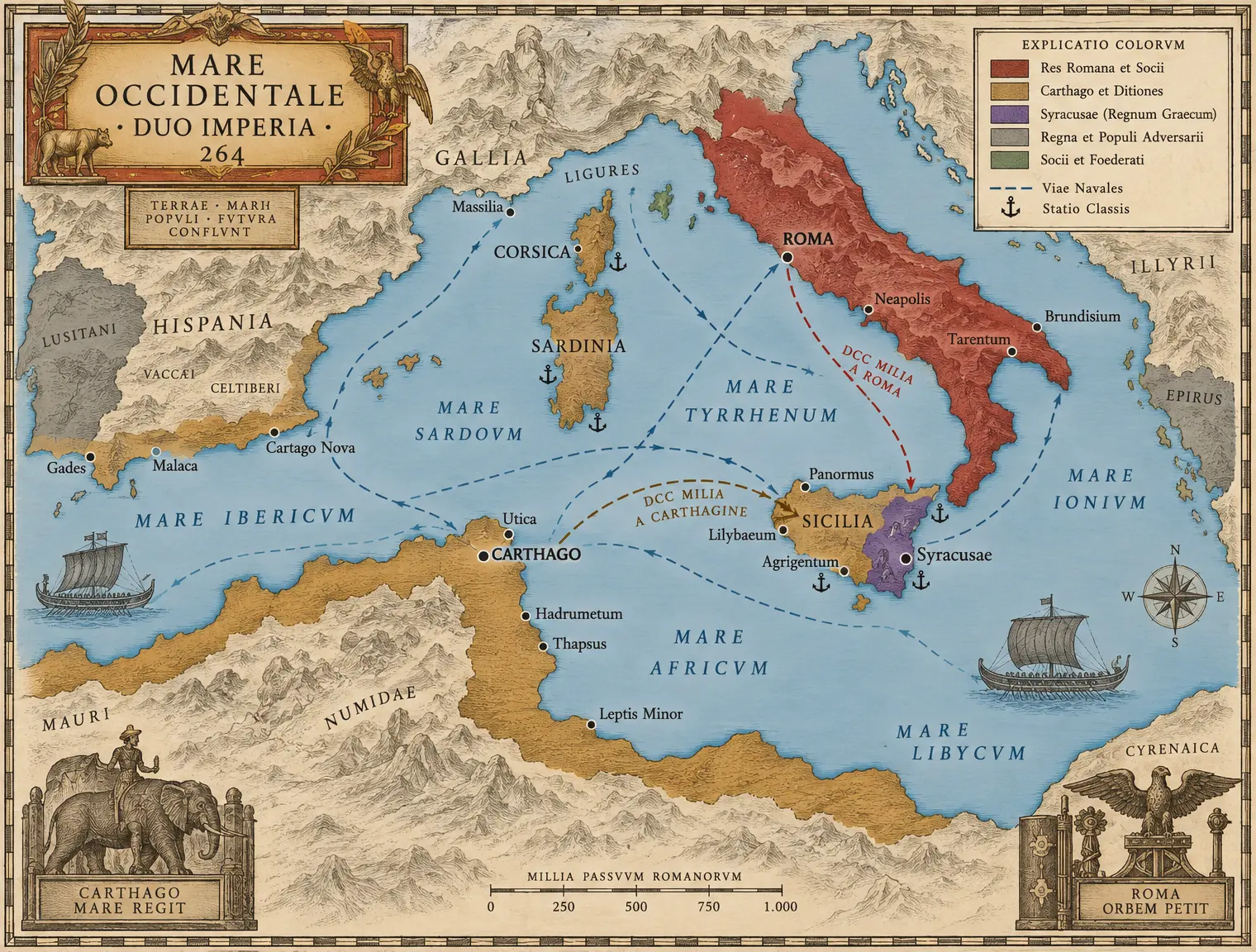 THE WESTERN MEDITERRANEAN 264
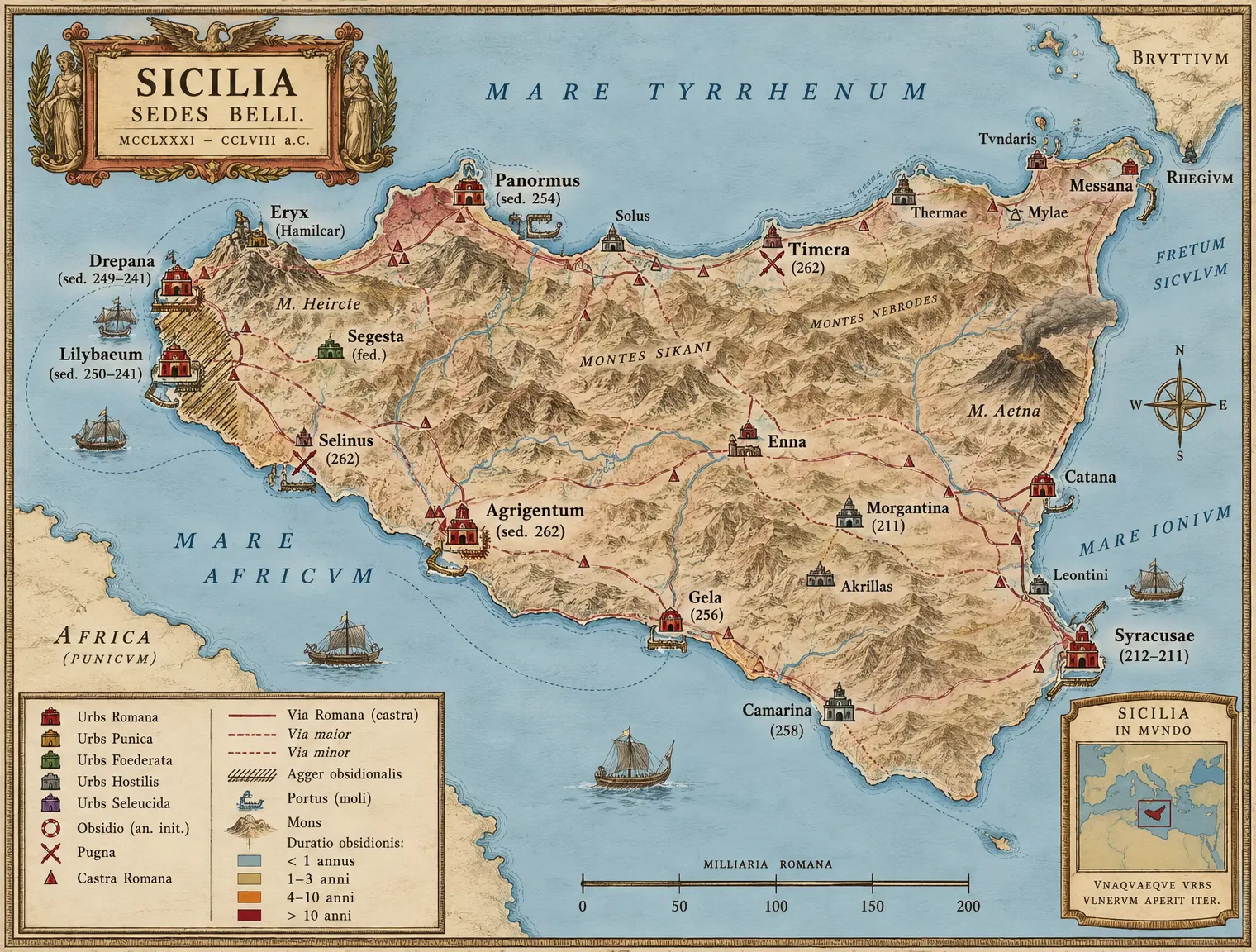 SICILIA — The Island War
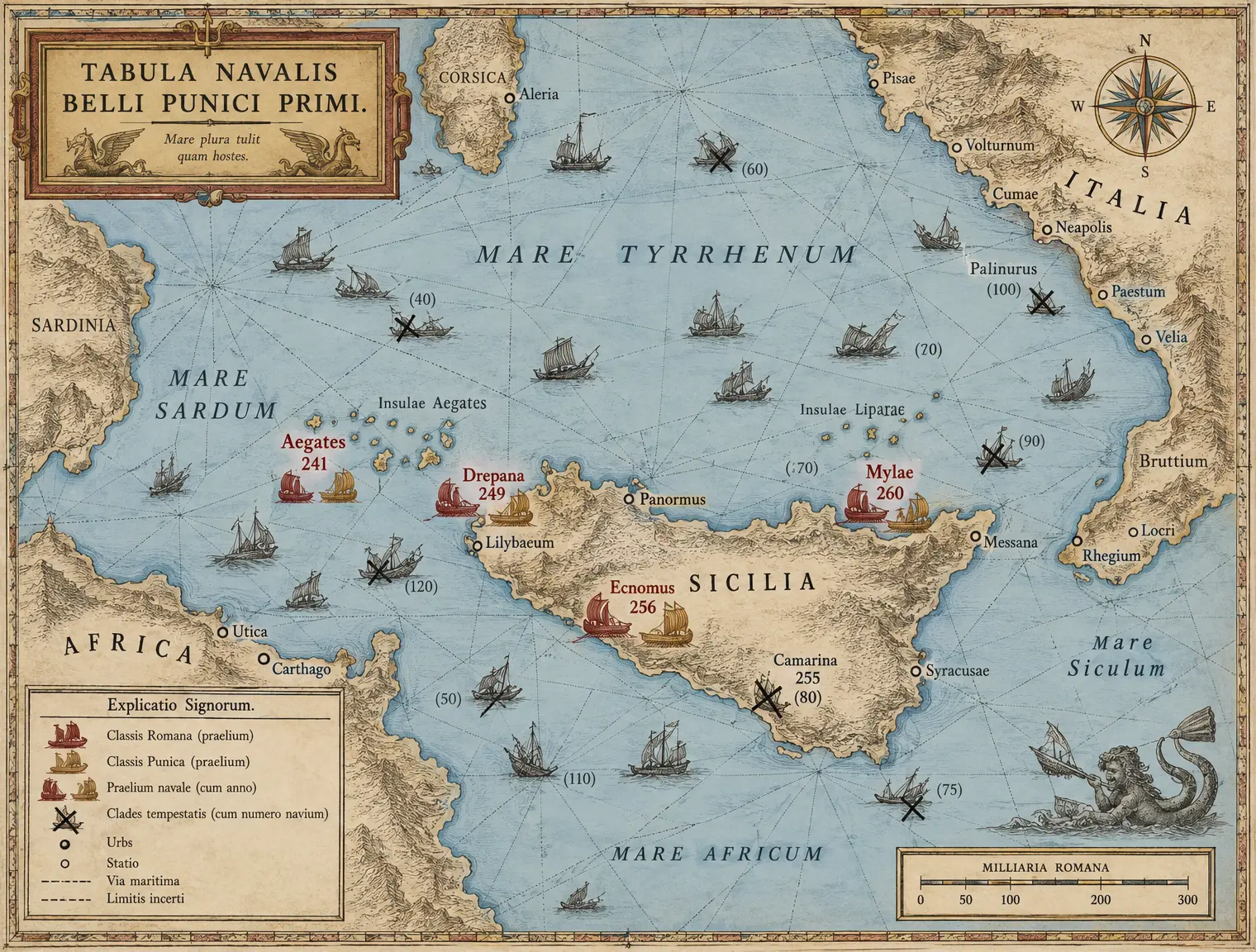 THE NAVAL CHART
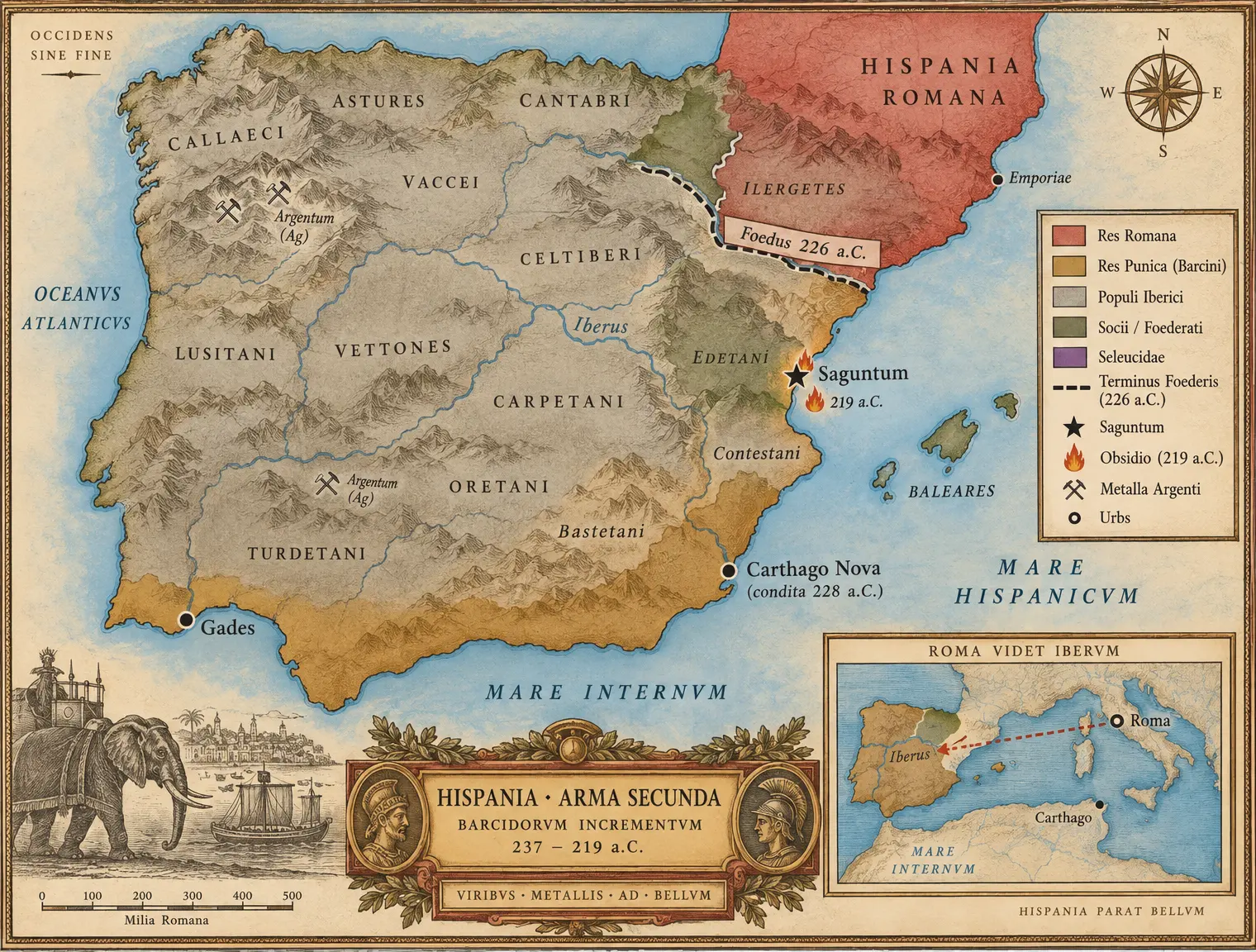 HISPANIA BARCINA
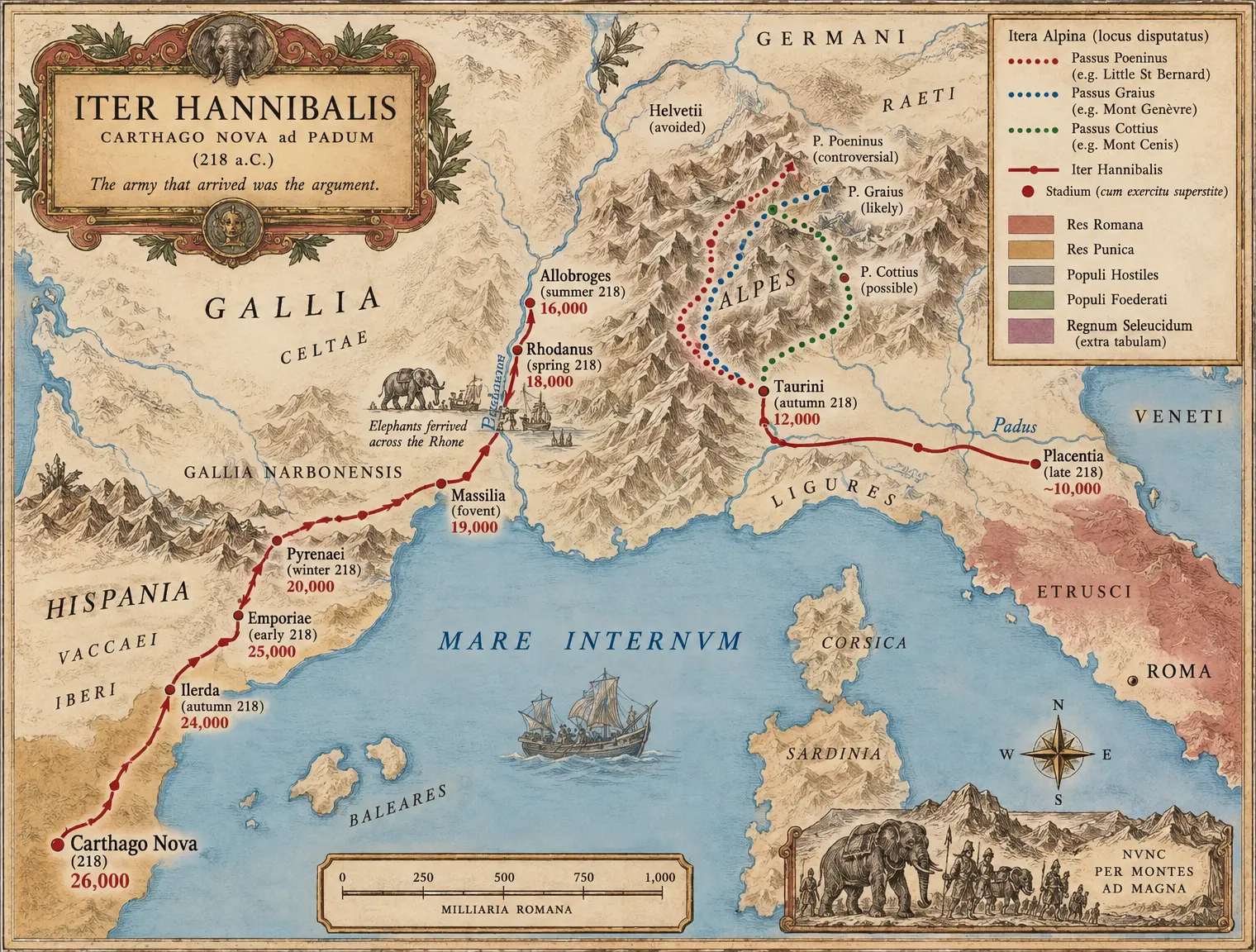 THE MARCH
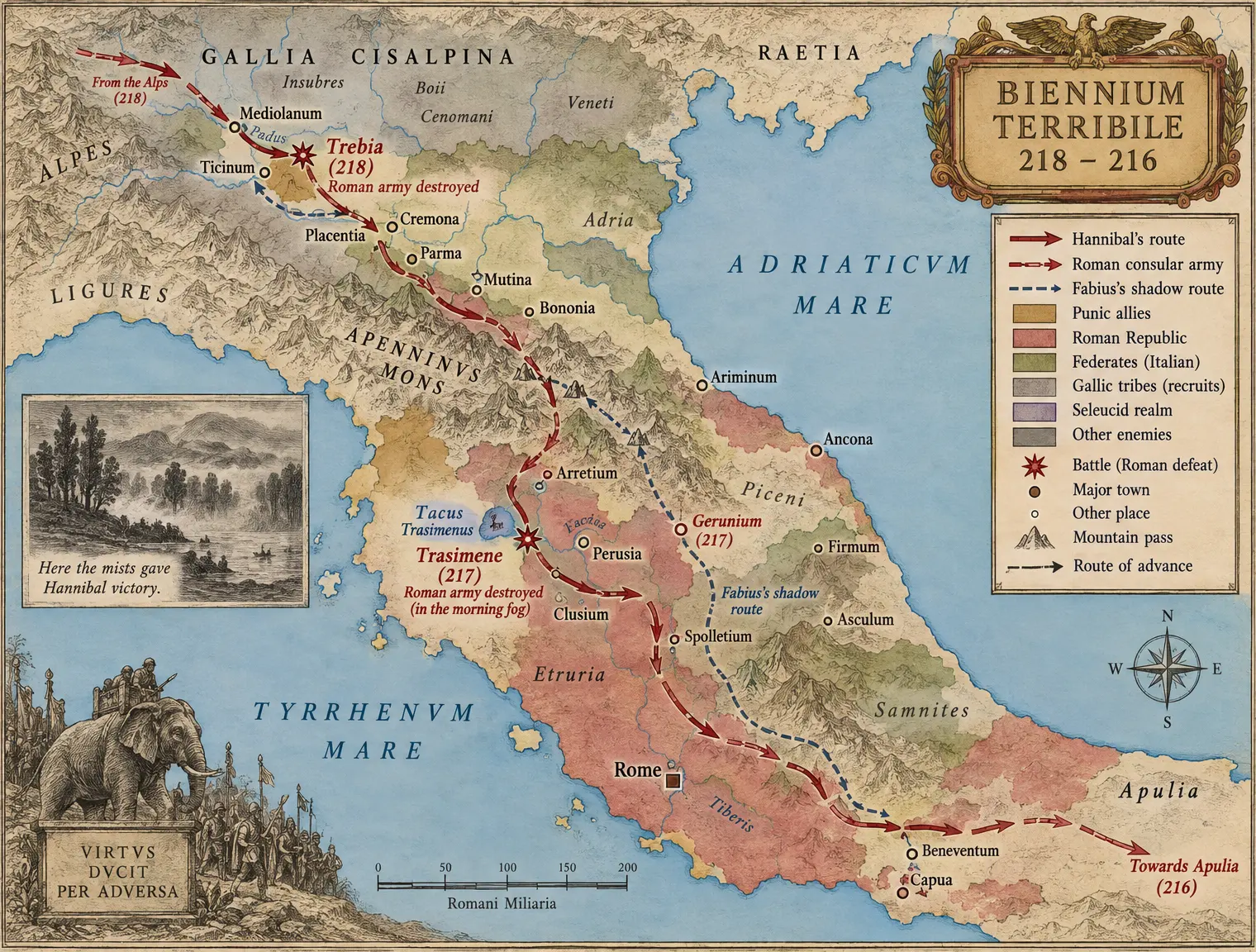 THE WAR-COUNTRY 218–216
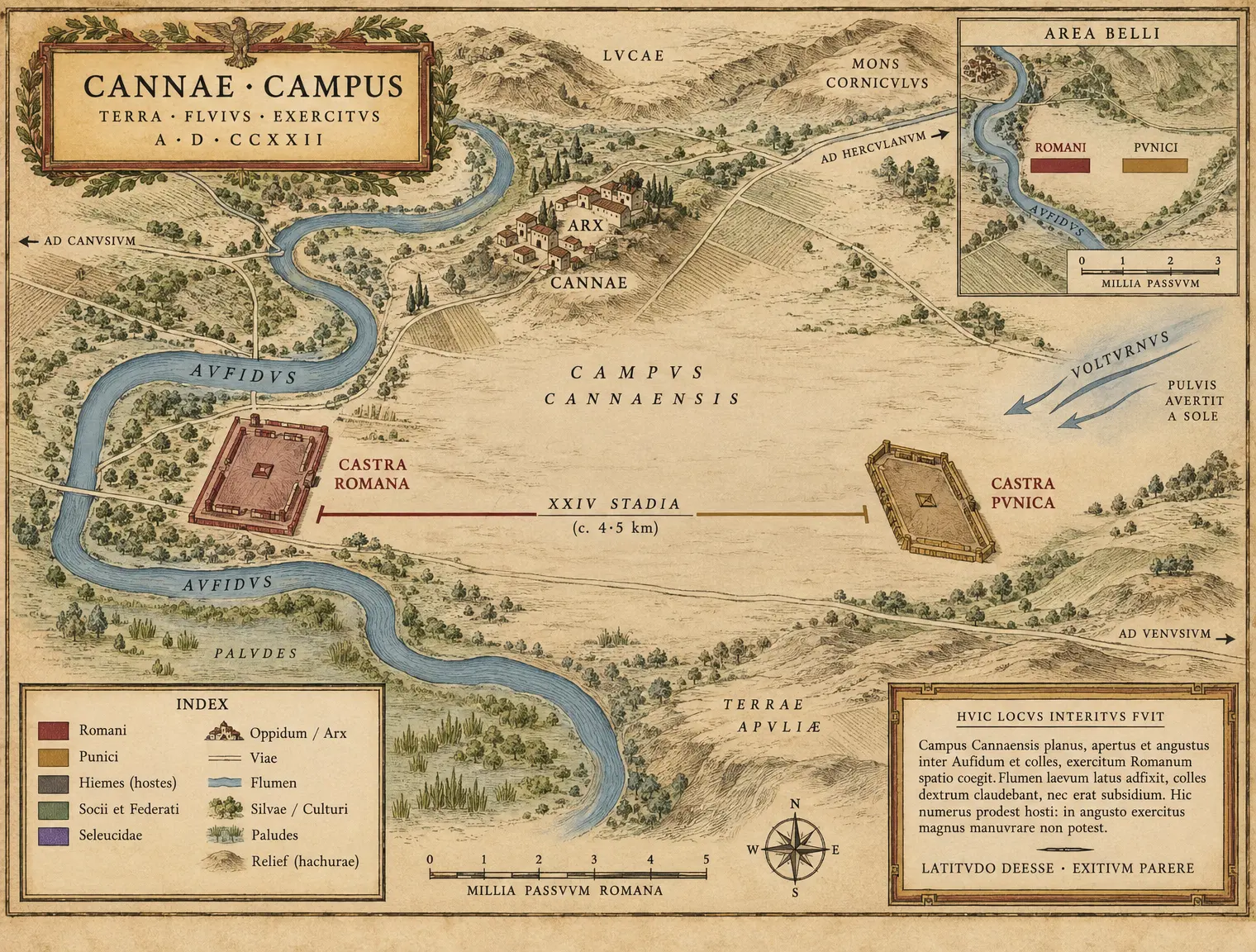 CANNAE — The Ground
Companion
To listen to and study
Podcasts
- II-A01Deep Dive · The Shipbuilding War23 min22.6 minutes · voiced by gemini-2.5-pro-tts This episode examines how the Roman Republic, possessing virtually no battle-fleet or naval tradition in 264 BC, transformed itself into
- II-A02Brief · The Corvus (~6 min)6 min5.7 minutes · voiced by gemini-2.5-pro-tts A tight operational brief on the Roman naval boarding engine known as the corvus: its technical specifications, its decisive battlefield
- II-A03Critique · Regulus: Martyr or Myth?15 min14.6 minutes · voiced by gemini-2.5-pro-tts In this critique, we examine the famous story of Marcus Atilius Regulus: the captured consul who returned to Carthage on parole only to
- II-A04Debate · Saguntum: Whose War Was It?18 min18.5 minutes · voiced by gemini-2.5-pro-tts In this debate, the hosts argue the resolution: Resolved: Rome engineered the Second Punic War . Examining the treaty boundaries of the
- II-A05Deep Dive · Cannae: Anatomy of Annihilation23 min23.2 minutes · voiced by gemini-2.5-pro-tts A comprehensive, minute-phase tactical analysis of the Battle of Cannae (2 August 216 BC), examining the operational geometry of Hanniba
Slide decks
- II-S01Two Ways to Lose EverythingThe Attrition Machine, the Hannibalic Escalation, and the Refusal to Treat (264–216 BC)
- II-S02Ecnomus: The Biggest Battle Nobody KnowsFleet Tactics, Combined Arms at Sea, and the Opening of the African Front (256 BC)
- II-S03Hannibal's DesignThe Strategy of Alliance Dissolution and Operational Destruction (218–216 BC)
Data tables
- II-T01The Naval Ledger (First Punic War, 264–241 BC)II-T01 · generated by the Imperium factory studio (gemini-3.8-flash) from Book II under the House Preamble.
- II-T02Table II-T02: Ecnomus Order of Battle (256 BC)Column Definitions :
- II-T03TABLE II-T03: The March Table — Hannibal Barca from the Ebro to Cannae (218–216 BC)The eight stages of the march from the Ebro to the Aufidus trace the execution of the most audacious operational offensive of antiquity. Hannibal's fundamental strategic thesis was
- II-T04Data Table II-T04: Cannae Order of Battle (2 August 216 BC)All ancient casualty counts are "the tradition's arithmetic" and require critical discrimination:
- II-T05The Escalation Ledger (218–216 BC)Column Definitions:
Mind maps
- II-M01Two Systems at War: Rome Versus CarthageII-M01 · generated by the Imperium factory studio (gemini-3.8-flash) from Book II under the House Preamble.
- II-M02Hannibal's Opening System (218–216 BC)II-M02 · generated by the Imperium factory studio (gemini-3.8-flash) from Book II under the House Preamble.
- II-M03Why Rome Kept Rowing (264–241 BC)II-M03 · generated by the Imperium factory studio (gemini-3.8-flash) from Book II under the House Preamble.
Infographics
- II-G01THE CORVUS — Architecture, Tactical Inversion, and Abandonment (260–241 BC)The bridge that made the sea a road — and its quiet retirement as a design confession.
- II-G02CANNAE IN FOUR FRAMES: The Geometry of Annihilation (2 August 216 BC)Cannae, 2 August 216 BC: the geometry of total encirclement that staff colleges still teach.
- II-G03THE FLEET-LOSS SEISMOGRAPH: Roman Naval Attrition and Replacement (264–241 BC)Rome lost more ships to weather than any ancient navy — and built more.
- II-G04THE ALPS PROFILE: Hannibal's Transverse and the Alpine Attrition (Autumn 218 BC)Infographic II-G04: An elevation profile of the Alpine crossing (Autumn 218 BC), charting the physical ascent from the Rhône to the Po, the five historically contested passes, and